How to Make Custom Metal Signs: Design, Material, Cutting and Finishing Guide
Learn how custom metal signs are made, what information you need before ordering, and how to choose materials, finishes, mounting methods, and production details for business, home, garage, workshop, and decorative sign projects.
If you are searching for how to make custom metal signs, you may be planning a business sign, garage wall sign, shop logo sign, outdoor address sign, personalized number plate, or decorative metal wall art. The process is not only about cutting a piece of metal. A good custom metal sign depends on design preparation, material selection, thickness, cutting method, surface finish, mounting style, packaging, and the real environment where the sign will be used.
This guide explains the full process from idea to finished product. It is written for buyers, small brands, workshop owners, online sellers, interior decorators, event organizers, and anyone who wants to order custom metal signs with a clearer understanding of the details.
1. Start with the Purpose of the Metal Sign
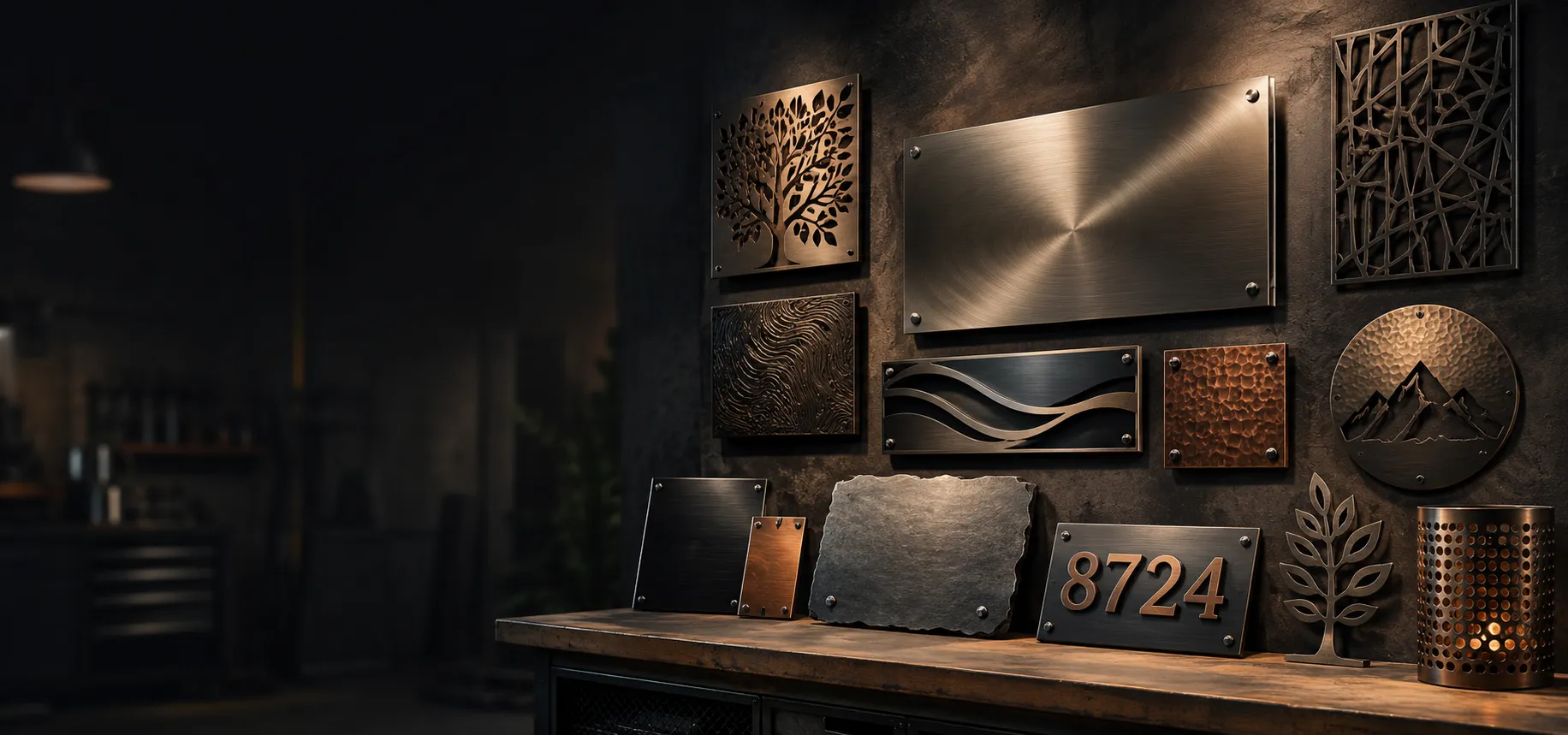
Before choosing material or finish, first confirm what the sign is used for. A business logo sign for a reception wall is different from a garage number sign, and an outdoor sign is different from a decorative metal wall art panel. The purpose affects material, size, thickness, finish, visibility, and mounting method.
For example, a shop sign may need clean brand visibility, while a garage sign may focus more on durability and personality. A personalized sports number sign may need a bold shape and color, while an outdoor custom metal sign may require corrosion-resistant material and strong mounting.
- Business signs usually need clean logo details and a premium finish.
- Outdoor signs need weather-resistant materials and protective coating.
- Garage and workshop signs can use powder-coated steel or aluminum.
- Decorative signs may focus more on cut patterns, shape, and surface style.
- Personalized number signs need readable digits, balanced layout, and correct size.
Practical tip: Before requesting a quote, write down where the sign will be installed, whether it is indoor or outdoor, the approximate size, the required color or finish, and the mounting method.
2. Prepare the Logo, Text, Number or Design File
The design file is one of the most important parts of making custom metal signs. If the sign includes a logo, brand name, number, pattern, or special shape, the manufacturer needs a clear file or reference image. Vector files are usually better for cutting and layout because they keep lines clean and scalable.
Useful file formats may include AI, SVG, DXF, DWG, PDF, or other vector drawings. If you only have a photo, sketch, or screenshot, it may still be possible to review the project first, but the design may need to be redrawn before production.
Useful design information to send
- Logo file, text, number, or pattern design.
- Overall sign size, such as width and height.
- Preferred material and thickness if known.
- Color, finish, or reference style.
- Indoor or outdoor use.
- Mounting method, such as screws, standoffs, adhesive backing, or hanging holes.
3. Choose the Right Metal Material
Material selection affects the appearance, weight, cost, strength, and outdoor performance of the sign. When people ask how to make custom metal signs, material is usually one of the first technical decisions.
Aluminum is lightweight and practical for many wall signs, shop signs, decorative signs, and personalized signs. Stainless steel is stronger and more corrosion-resistant, suitable for premium signs and outdoor applications. Carbon steel is often used when a powder-coated finish is required. Brass and copper can create a vintage, luxury, or warm decorative appearance.
4. Confirm Thickness and Size
The thickness of a custom metal sign should match the size, installation method, and expected strength. A small indoor sign can use thinner material, while a large outdoor sign or structural sign may require thicker metal. Very thin metal may bend easily, while very thick metal increases weight and cost.
Size also affects production cost and shipping. If the sign is large, packaging must protect corners, edges, and surface finish during transportation. For wall-mounted signs, the size should match the viewing distance and installation background.
Questions to confirm
- What is the final sign width and height?
- Will the sign be installed indoors or outdoors?
- Does it need to be lightweight?
- Does it need screw holes, standoffs, or hanging holes?
- Does the sign include fine cut details or narrow lines?
5. Select the Cutting Method
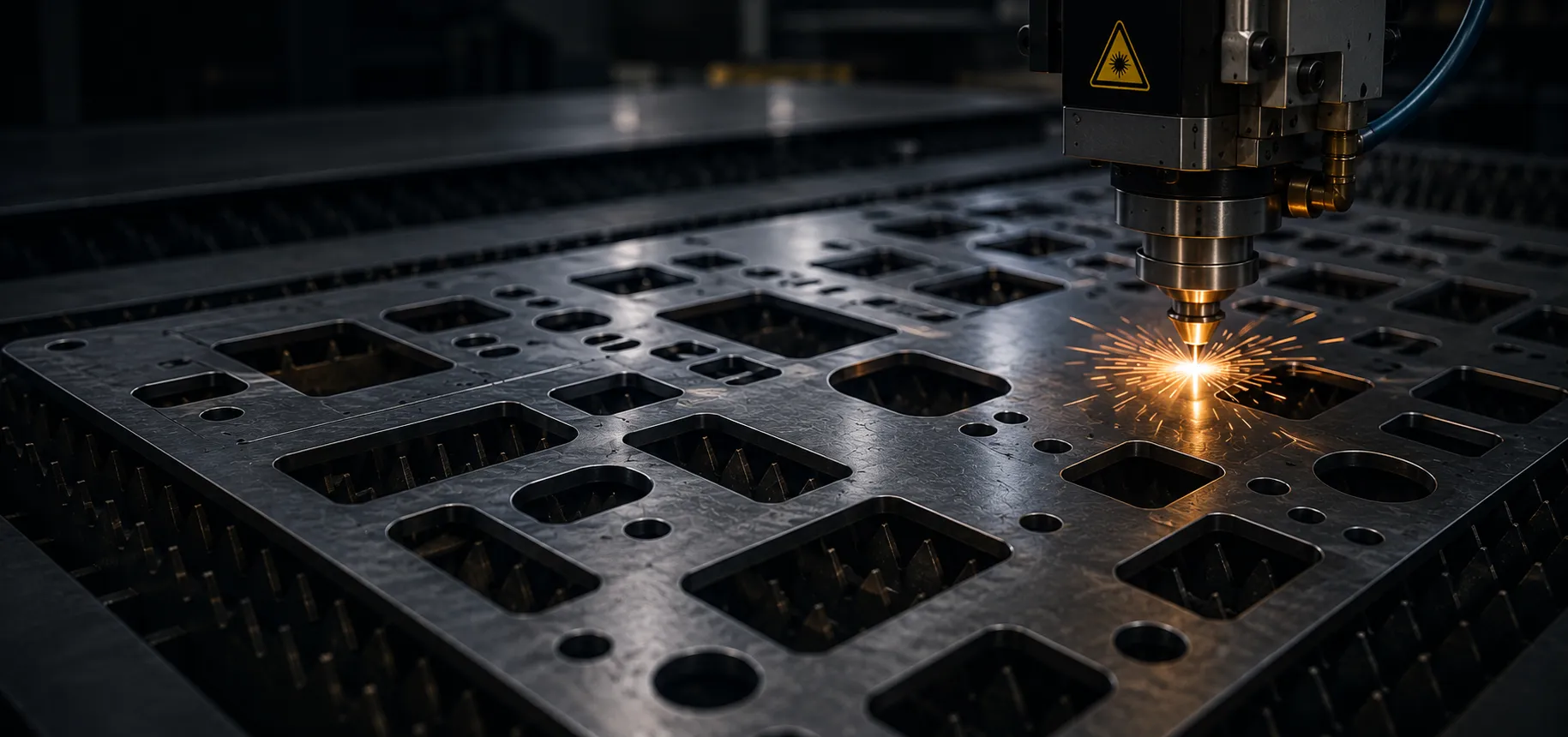
Many custom metal signs are made by laser cutting because laser cutting can create clean outlines, letters, numbers, patterns, and internal cutouts. It is suitable for custom shapes, logo signs, decorative panels, garage signs, address signs, and many small-batch metal sign projects.
For signs with detailed patterns or small internal shapes, the design should be checked carefully. Very narrow lines, tiny holes, or weak connection points may need design adjustment to avoid breakage or poor cutting results.
6. Choose the Surface Finish
Surface finish has a major effect on the final style of a custom metal sign. A brushed finish gives a clean modern appearance. Powder coating can provide color and durability. Matte black is popular for garage signs, wall art, and modern decorative signs. Polished metal creates a more premium effect. Antique finishes may be used for vintage-style plaques and decorative pieces.
If the sign will be used outdoors, the finish should be selected with weather resistance in mind. Powder coating, paint, stainless steel, and proper surface treatment can help improve durability, but the final choice depends on the environment and expected service life.
7. Decide How the Sign Will Be Mounted
Mounting is often forgotten until the sign is finished, but it should be confirmed early. The mounting method affects hole position, edge distance, thickness, structure, and packaging. Common options include screw holes, standoff mounting, adhesive backing, hanging holes, welded tabs, or frame installation.
For outdoor signs or larger signs, stronger mechanical mounting is usually safer. For small indoor plaques or decorative signs, adhesive backing or simple screw holes may be enough. Always consider the wall material, sign weight, and installation environment.
8. Request a Quote with Complete Details
If you want a fast and accurate quotation, send complete information in one message. The more details you provide, the less time is spent on repeated questions. A clear drawing or reference image is especially helpful.
Quick Quote Checklist
Send these details to make quotation faster and more accurate:
- Product type: business sign, garage sign, number sign, wall art, logo sign, or outdoor sign.
- Design file: AI, SVG, DXF, DWG, PDF, sketch, photo, or reference image.
- Material: aluminum, stainless steel, carbon steel, brass, copper, or other material.
- Size and thickness.
- Surface finish and color.
- Quantity.
- Mounting method.
- Delivery country or region.
9. Common Mistakes When Making Custom Metal Signs
Some problems can be avoided before production begins. The most common issues include unclear design files, wrong material choice, too many tiny details, insufficient mounting holes, no finish requirement, and no clear size information.
Another common mistake is choosing a material only based on appearance. For example, an outdoor sign may look good at first, but if the material and finish are not suitable for the environment, the sign may not perform well over time.
Avoid these issues
- Sending a low-resolution logo without dimensions.
- Not confirming indoor or outdoor use.
- Choosing a sign size without considering viewing distance.
- Forgetting mounting holes or installation method.
- Using very thin strokes or weak design connections.
- Not confirming finish, color, and packaging needs.
10. Should You Make It Yourself or Order from a Supplier?
Small DIY signs can be made with simple tools, but professional custom metal signs usually need proper cutting equipment, finishing process, material knowledge, and packaging experience. If the sign includes a logo, fine pattern, powder coating, brushed finish, outdoor use, or batch production, working with a custom metal sign supplier is usually more practical.
CraftMetal Works helps customers review design files, material choices, finish requirements, quantity, and mounting details before quotation. This is useful for businesses, stores, workshops, creators, and small-batch custom product customers.
FAQ About How to Make Custom Metal Signs
What is the best material for custom metal signs?
Aluminum is lightweight and practical for many indoor signs. Stainless steel is suitable for premium and outdoor signs. Carbon steel works well for powder-coated signs. Brass and copper are often used for decorative or vintage-style signs.
Can I make custom metal signs from a logo file?
Yes. A clear vector logo file such as AI, SVG, DXF, or PDF is very helpful. If you only have a photo or screenshot, it may need to be redrawn before production.
Are custom metal signs suitable for outdoor use?
Yes, but outdoor use requires proper material and finish selection. Stainless steel, aluminum, powder coating, painting, and suitable mounting methods can be considered depending on the environment.
What details should I send for a custom metal sign quote?
Send the design file, size, material, thickness, quantity, finish, mounting method, indoor or outdoor use, and delivery country.
Can I order one custom metal sign?
Yes. One-piece samples and small-batch orders can be discussed. The unit cost is usually better when the quantity increases.
Related Custom Metal Product Options
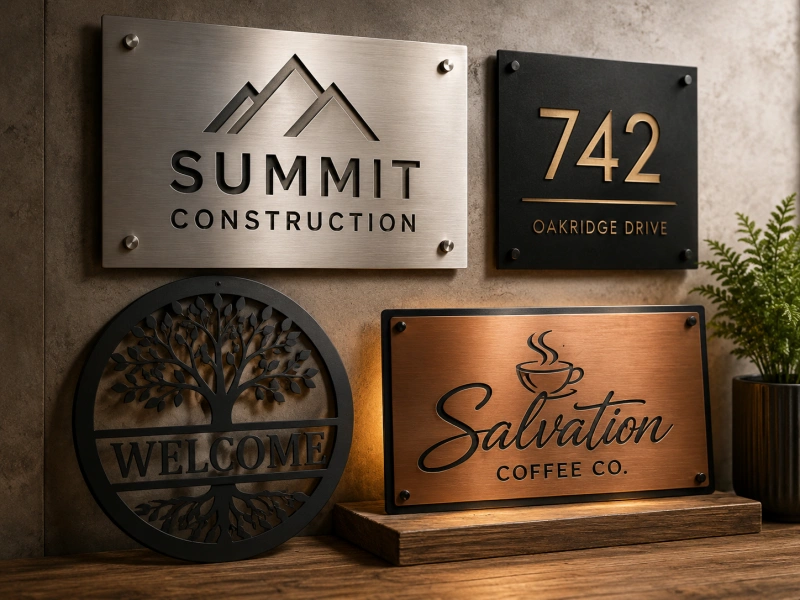
Custom Metal Signs
Logo signs, wall signs, garage signs, number signs, and personalized metal signs.
View Custom Metal Signs →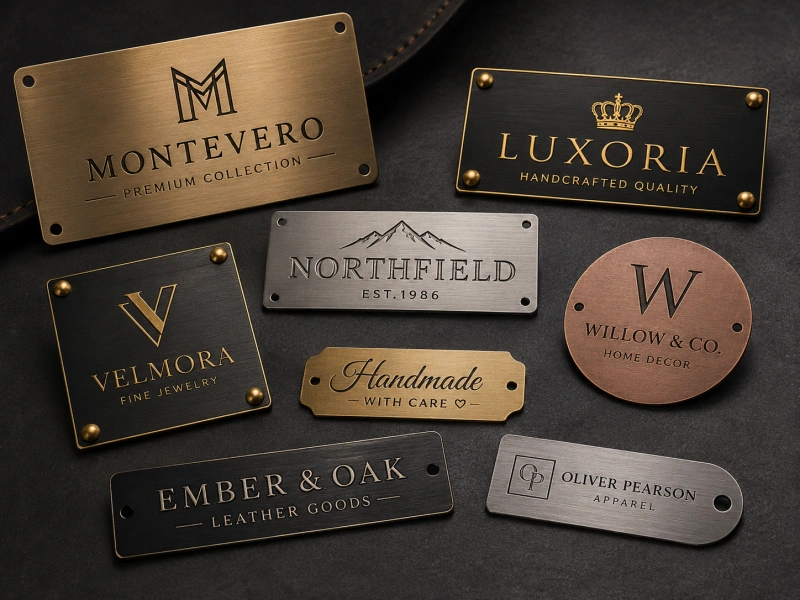
Metal Plaques
Award plaques, memorial plaques, equipment tags, and brand display plates.
View Metal Plaques →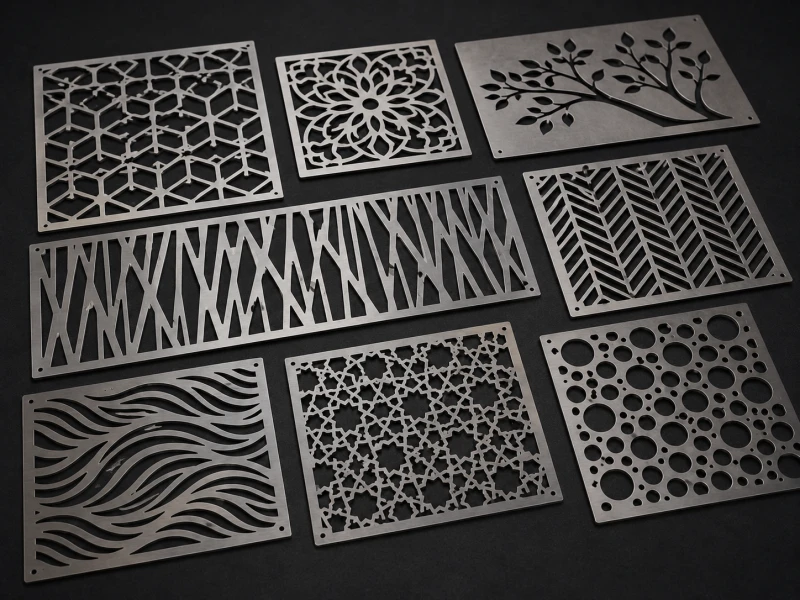
Laser Cut Parts
Flat components, cut panels, brackets, decorative patterns, and custom metal parts.
View Laser Cut Parts →Need Custom Metal Signs for Your Business or Project?
Send your logo, text, number, drawing, size, material, thickness, finish, quantity, mounting method, and delivery country. CraftMetal Works will help review your custom metal sign project and provide a practical quotation.
Request a Quote