Sheet Metal Parts Guide
Custom Sheet Metal Enclosures: Design, Materials and Small-Batch Fabrication Guide
Learn how to plan custom sheet metal enclosures for electronics, machines, control boxes, covers, housings, prototypes, and small-batch fabricated metal products.
Custom sheet metal enclosures are used to protect electronic parts, machine modules, control components, sensors, power supplies, cables, and mechanical assemblies. A good enclosure is not only a metal box. It should match the product size, internal components, mounting method, ventilation needs, material thickness, bending structure, surface finish, and installation environment.
For small-batch projects, prototypes, equipment covers, and custom metal boxes, sheet metal fabrication is often a practical solution. It can support laser cutting, bending, drilling, tapping, welding, finishing, and assembly according to drawings or reference designs.
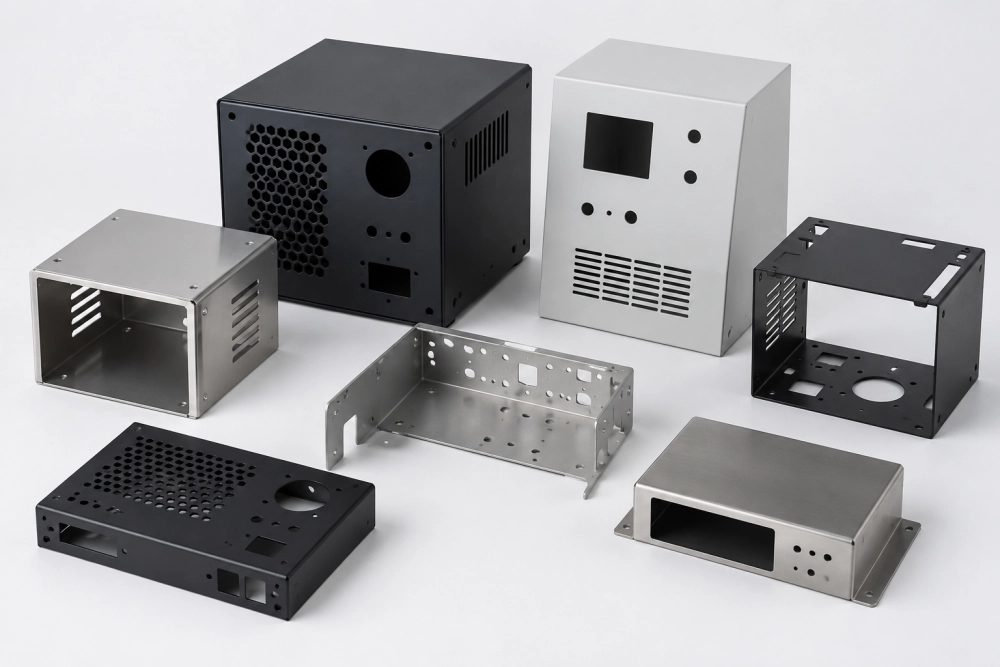
1. What Are Custom Sheet Metal Enclosures?
A sheet metal enclosure is a formed metal housing used to protect, organize, or cover internal parts. It may be a simple box, a machine cover, an electronic enclosure, a control box, a protective housing, a bracketed case, or a small metal cabinet.
Custom enclosures are different from standard boxes because the size, hole positions, cutouts, mounting points, bending structure, and finish can be made according to the project requirement. This is useful when the product does not fit a standard enclosure or when the customer needs a special appearance.
- Electronic control boxes and project housings.
- Machine covers and protective cases.
- Small metal cabinets and instrument boxes.
- Power supply, sensor, and cable protection covers.
- Prototype enclosures and low-volume custom metal boxes.
Practical tip: Before asking for a quote, prepare the enclosure size, drawing, material, thickness, cutouts, bending structure, mounting holes, finish, quantity, and delivery country.
2. Common Applications for Sheet Metal Enclosures
Sheet metal enclosures are used in many industries because they are strong, customizable, and suitable for both functional and appearance requirements. Some projects need a simple protective shell, while others require accurate cutouts, ventilation, hinges, covers, or assembly features.
For product developers and equipment builders, custom enclosures can help turn a prototype into a more complete product. For machine builders, enclosures and covers can improve protection, maintenance access, and overall machine appearance.
Typical enclosure projects include:
- Control boxes for small machines and automation modules.
- Electronic housings for sensors, displays, and power units.
- Machine covers for cables, motors, switches, and internal parts.
- Metal boxes for testing devices, instruments, and prototypes.
- Protective cases for indoor equipment and small-batch products.
3. Material Selection for Custom Sheet Metal Enclosures
Material choice affects strength, weight, corrosion resistance, finish, and cost. Common options include stainless steel, aluminum, carbon steel, and galvanized steel. The best material depends on whether the enclosure will be used indoors or outdoors, whether it needs to be lightweight, and whether the appearance is important.
4. Thickness, Strength and Bending Design
Thickness should match the enclosure size and function. A small electronics box may use thinner material, while a machine housing or large cover may need thicker metal to reduce bending and vibration. If the enclosure needs to support components, mounting points and reinforcement should be considered.
Bending design is also important. The drawing should show bend direction, bend angle, inside radius, flange size, hole position, and assembly method. If holes are too close to a bend line, they may deform during bending. If flanges are too short, the part may be difficult to form accurately.
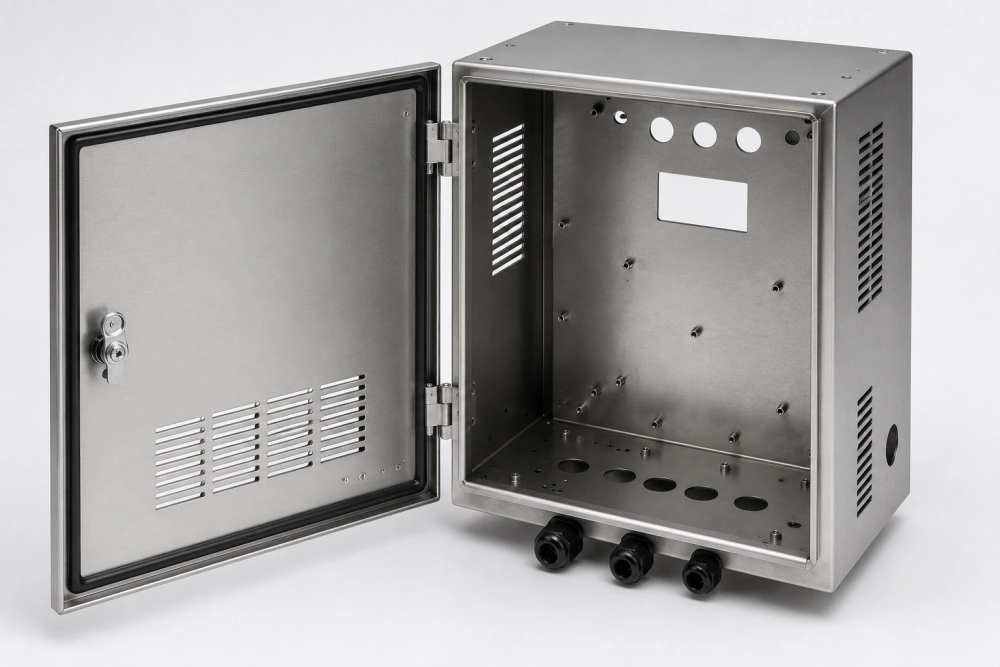
5. Cutouts, Ventilation and Mounting Holes
Custom sheet metal enclosures often need holes, slots, windows, cable openings, connector cutouts, ventilation patterns, and mounting holes. These details should be planned early because they affect usability and production accuracy.
Ventilation is important for electronic components, power supplies, and control modules. Mounting holes are important for fixing internal parts, attaching the enclosure to a wall or machine frame, or connecting covers with screws.
- Connector openings for cables, switches, plugs, and ports.
- Ventilation holes or slots for heat dissipation.
- Screw holes, countersunk holes, or threaded holes.
- Access windows, display cutouts, and button openings.
- Hinge, latch, cover, and assembly features.
6. Surface Finish Options
Surface finish improves appearance and protection. Some enclosures only need deburring, while others need powder coating, painting, brushing, plating, anodizing, or polishing. If the enclosure is part of a product sold to customers, appearance may be as important as function.
Powder coating is common for carbon steel enclosures and machine covers. Brushed stainless steel can create a clean industrial look. Aluminum enclosures may use anodizing or painting depending on the design requirement.
7. Prototype and Small-Batch Enclosure Fabrication
Many enclosure projects start with one sample or a small batch. This is useful when the product is still being tested or when the final design may change. A prototype enclosure can help check size, internal clearance, mounting points, ventilation, assembly, and appearance before larger production.
CraftMetal Works supports custom sheet metal parts, laser cut metal parts, covers, panels, brackets, enclosures, and small-batch fabricated metal products. You can review related capabilities on our custom sheet metal parts page.
8. What to Send for a Custom Enclosure Quote
A clear quote depends on clear project details. If you have drawings, send them first. If you only have a sample photo or idea, you can still send reference images, approximate dimensions, and application details for initial review.
Custom Sheet Metal Enclosure Quote Checklist
- Drawing file: DXF, DWG, STEP, PDF, or clear reference drawing.
- Overall size, material, thickness, and quantity.
- Bending, welding, tapping, drilling, or assembly requirements.
- Ventilation holes, connector cutouts, windows, and mounting holes.
- Surface finish: powder coating, painting, brushing, plating, or anodizing.
- Application details, indoor or outdoor use, and delivery country.
FAQ About Custom Sheet Metal Enclosures
What are custom sheet metal enclosures used for?
They are used for electronic boxes, machine covers, control housings, protective cases, instrument boxes, prototype products, and small-batch fabricated metal products.
What material is best for sheet metal enclosures?
Aluminum is lightweight, stainless steel is stronger and corrosion-resistant, carbon steel is practical for coated parts, and galvanized steel can be used for some protective covers.
Can I order a small batch of custom enclosures?
Yes. Small-batch fabrication is suitable for prototypes, product testing, custom equipment, and low-volume metal box projects.
What files are needed for a quote?
DXF, DWG, STEP, PDF drawings, or clear reference images are helpful. Also send material, thickness, quantity, finish, bending details, and delivery country.
Need Custom Sheet Metal Enclosures?
Send your drawing, size, material, thickness, quantity, cutouts, bending details, finish, and delivery country. CraftMetal Works can help review your custom sheet metal enclosure project and provide a practical quotation.
Request a Quote