Cable Turnbuckles: Types, Sizing and Rigging Applications for Wire Rope Assemblies
Cable turnbuckle assemblies are the go-to tensioning hardware for wire rope, cable railings, guy lines and light-to-medium rigging systems. Whether you are designing a marine rig, a structural bracing kit or an architectural cable barrier, the right cable turnbuckle keeps the line taut without over-stressing the fittings. In this guide, we break down the common cable turnbuckle types, sizing logic and installation practices B2B buyers and engineers use every day.
CraftMetal Works manufactures precision cable turnbuckles and related rigging hardware for industrial, marine and architectural applications. Browse our industrial metal hardware catalog or contact our team for custom sizes and bulk quotes.
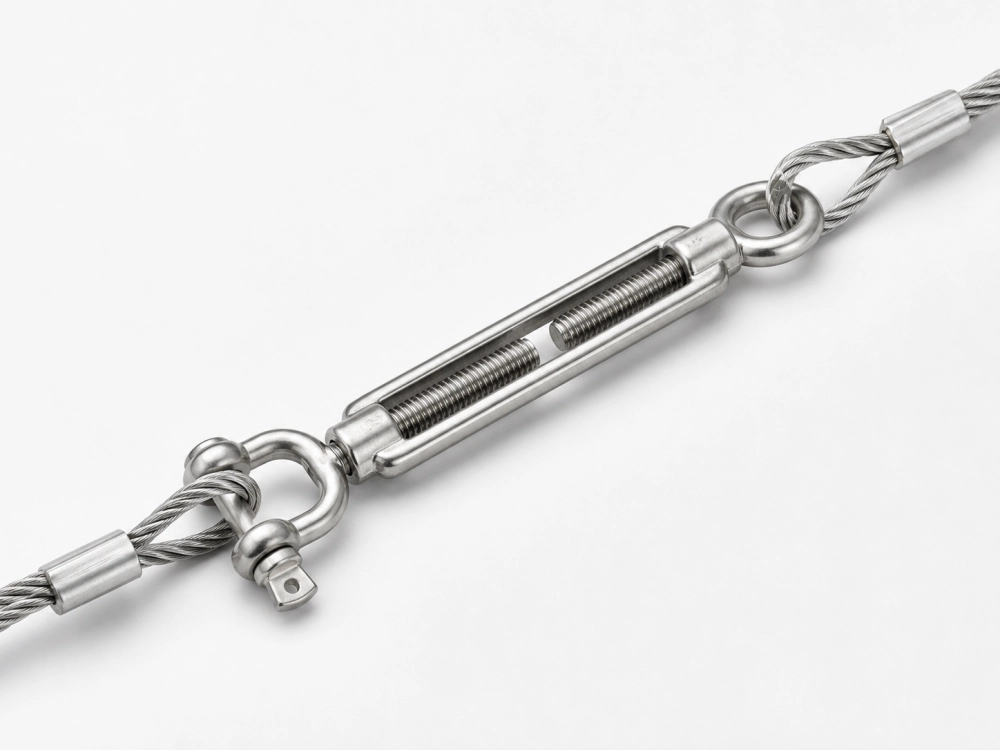
What Is a Cable Turnbuckle?
A cable turnbuckle is a metal device with two threaded end fittings and a central body that adjusts length. Rotating the body extends or retracts the end fittings, increasing or decreasing tension in the attached cable or wire rope. Once the desired tension is reached, the body is locked with lock nuts or wire clips to prevent unwinding under vibration.
Because cable turnbuckles are compact, reusable and easy to tension in the field, they appear in:
- Marine rigging and sailboat stays
- Architectural cable railings and trellis systems
- Telecom and utility guy wires
- Stage rigging and temporary structures
- Suspension signs, awnings and canopies
Common Cable Turnbuckle Types
The end fittings define the turnbuckle type and the assembly’s connection method. Selecting the correct combination reduces fabrication steps and improves load distribution.
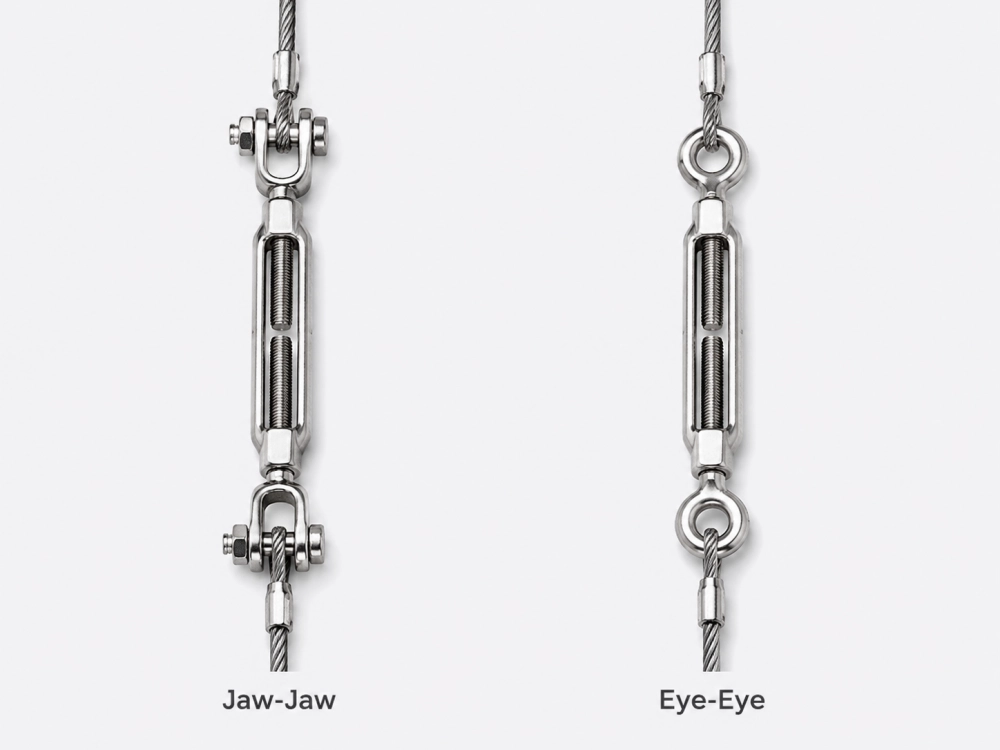
Eye-to-Eye Cable Turnbuckle
Both ends are closed loops (eyes). This type is ideal when the cable or shackle can pass through the eye and be secured with a pin or bolt. It is common in permanent structural bracing and cable railing end terminations.
Jaw-to-Jaw Cable Turnbuckle
Both ends are open jaws with a clevis pin. Jaw-to-jaw assemblies connect directly to welded lugs, anchor plates or other jaw fittings without needing extra shackles. They are popular in architectural and industrial framing where the connection must be inline.
Hook-to-Eye Cable Turnbuckle
One end is a hook and the other an eye. Hook ends allow quick attachment to chains, wire rope thimbles or existing anchor points, but they are not recommended for permanent overhead lifting where accidental unhooking is a risk.
Swage Turnbuckle vs. Open-Body Turnbuckle
Swage turnbuckles have end fittings that are mechanically swaged onto the cable end, creating a compact, fixed assembly. Open-body turnbuckles allow the cable to be field-cut and terminated separately, making them easier to adjust on site.
Cable Turnbuckle Sizing Guide
Choosing the correct cable turnbuckle size starts with the working load limit (WLL) of the wire rope and the expected tension. The turnbuckle’s WLL must exceed the maximum working tension, including dynamic loads and safety factors.
Key sizing factors:
- Thread diameter: Larger threads handle higher loads and resist bending.
- Body length and take-up: Longer bodies provide more adjustment range but add weight.
- End fitting geometry: Eyes and jaws spread load evenly; hooks concentrate it.
- Material grade: 304 or 316 stainless steel resists corrosion; galvanized steel offers a lower-cost outdoor option.
- Safety factor: Use a 5:1 safety factor for static rigging and higher for dynamic or personnel applications.
Cable Turnbuckle Type Comparison
| End Fitting | Best For | Load Path | Typical Applications |
|---|---|---|---|
| Eye-to-Eye | Permanent inline bracing | Direct pin connection | Cable railings, guy wires, trellises |
| Jaw-to-Jaw | Structural framing with lugs | Inline clevis pin | Architectural steel, canopies, shade sails |
| Hook-to-Eye | Temporary or quick attachment | Hook engagement | Temporary rigging, signs, light bracing |
| Swage | Compact cable assemblies | Swaged terminal | Marine lifelines, stainless cable displays |
Materials and Finishes for Cable Turnbuckles
The material choice determines corrosion resistance, appearance and cost. For outdoor architectural or marine cable turnbuckle assemblies, 316 stainless steel is the standard because it resists chloride attack. For general industrial use, 304 stainless steel or hot-dip galvanized carbon steel provides a cost-effective balance. Polished or brushed finishes are common in visible architectural installations.
Installation Best Practices
Proper installation extends service life and prevents fatigue failures:
- Install the turnbuckle so the body is roughly centered at the target tension; this leaves adjustment room in both directions.
- Use wire rope thimbles at the cable eye to prevent pinching and chafing.
- Lock the turnbuckle body with jam nuts or lock wire after tensioning.
- Inspect threads and end fittings periodically for corrosion, galling or deformation.
- Do not exceed the manufacturer’s working load limit.
Frequently Asked Questions
What size cable turnbuckle do I need?
Match the turnbuckle’s working load limit to the wire rope’s maximum working tension with a 5:1 safety factor. Also confirm the thread diameter and take-up range suit your installation geometry.
Can cable turnbuckles be used for lifting?
Only if rated and certified for lifting by the manufacturer. Most standard cable turnbuckles are designed for tensioning and static bracing, not dynamic overhead lifting.
How do I stop a cable turnbuckle from loosening?
After tensioning, tighten the lock nuts against the body or secure the body with lock wire. Vibrating applications may also require thread-locking compound.
Are stainless steel cable turnbuckles worth the extra cost?
For marine, coastal or architectural applications, yes. Stainless steel eliminates the need for ongoing maintenance and avoids rust streaks on adjacent surfaces. For dry, sheltered industrial use, galvanized steel may be sufficient.
Get a Quote for Custom Cable Turnbuckles
CraftMetal Works produces stainless steel and galvanized cable turnbuckles in standard and custom configurations for OEM, construction and marine buyers. Send us your specifications, target quantity and finish requirements through our contact page and we will return a quote with lead time and material certification options.